Polymerase Chain Reaction (PCR) remains the gold standard for molecular detection of Ureaplasma parvum, a species implicated in urogenital tract infections, infertility, and neonatal complications. Standardizing positive controls is a key component in assay validation, especially when deploying protocols across diverse real-time PCR platforms.
Importance of Positive Controls in Clinical PCR Assays
Positive controls ensure the assay can detect the target DNA under test conditions. In clinical microbiology, particularly for fastidious organisms like Ureaplasma parvum, false negatives can have serious clinical consequences. Guidelines from the CDC and NIH emphasize the inclusion of validated positive controls in nucleic acid amplification tests (NAATs). Additionally, the World Health Organization (WHO) provides overarching protocols for molecular diagnostics in reproductive health.
Characteristics of Ideal Positive Controls
A suitable positive control for U. parvum PCR must:
- Contain a defined concentration of target DNA
- Be free of inhibitors
- Be compatible with the master mix chemistry
- Have equivalent extraction behavior to clinical specimens
Resources such as the FDA’s EUA templates, CDC’s Real-Time PCR protocol guidelines, and NIH assay development policies are useful in selecting appropriate materials.
Cross-Platform Evaluation
PCR platforms differ in thermocycling speed, fluorescence detection optics, and software algorithms. This necessitates rigorous validation of controls across devices like the Applied Biosystems QuantStudio, Bio-Rad CFX96, Roche LightCycler, and Qiagen Rotor-Gene.
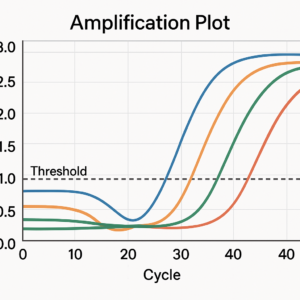
A comparative study conducted by the University of Alabama at Birmingham demonstrated slight shifts in Ct values (~0.5 cycles) for the same U. parvum control across systems. These differences, though small, can be critical when working near the limit of detection (LoD).
For calibration, researchers can refer to NIST SRM 2372 for human DNA quantification or follow quantification guidelines from the European Molecular Biology Laboratory (EMBL). The University of California, Davis Genome Center and University of Michigan Genomics Core also provide best practices and benchmarking tools.
Control Format: Synthetic Fragments vs. Genomic Extracts
Synthetic controls such as gBlocks or plasmid constructs (available from sources like BEI Resources) offer precision in copy number and are non-infectious. However, they may not represent extraction behavior. Whole-organism lysates more closely mimic clinical material but require BSL-2 containment.
The American Type Culture Collection (ATCC) provides genomic DNA from U. parvum strains validated for use in NAATs. The University of Texas Medical Branch (UTMB) and University of Wisconsin–Madison Department of Bacteriology are also active in validating microbial DNA controls.
Quality Metrics: Ct Stability, LoD, and Reproducibility
A robust positive control must yield consistent Ct values with a low coefficient of variation (CV). According to studies from the University of Washington Department of Laboratory Medicine, the CV should remain under 3% across replicates. The LoD must be established using serial dilutions and should align with CLSI EP17-A2.
Batch-to-batch consistency can be monitored using digital PCR (dPCR), as recommended in NIH genomic measurement guidelines. For a broader perspective, consult NIH’s National Human Genome Research Institute and the CDC Division of Laboratory Systems.
Inhibition Controls and Multiplexing
Multiplex PCR systems often include internal amplification controls (IACs) to monitor for inhibition. The interaction between the U. parvum target and IAC must be empirically verified. Recommendations from the Public Health England PCR guidelines advise adjusting fluorophore selection to minimize spectral overlap.
University of Colorado Boulder and Johns Hopkins Bloomberg School of Public Health have published PCR troubleshooting protocols addressing inhibition, signal loss, and inter-target competition.https://affigen.com/fr-fr/products/afficheck-mycoplasma-pneumoniae-dna-pcr-qualitative-positive-control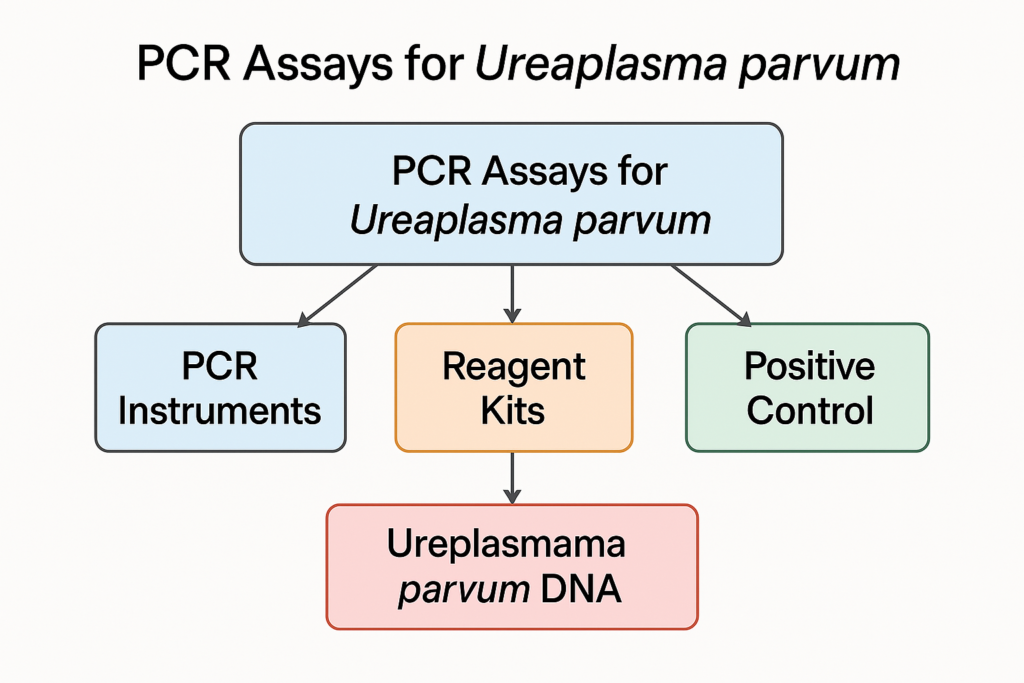
Summary
PCR detection of Ureaplasma parvum requires meticulous integration of validated positive controls. Factors like control format, platform compatibility, and quantification strategy significantly influence assay performance. Public repositories like NCBI GenBank, the European Nucleotide Archive (ENA), and initiatives such as the NIH Microbiome Project provide valuable genomic references to support assay design.
For consistent diagnostics, clinical labs must align with technical standards from CAP, CLIA, and international frameworks such as ISO 15189. Ongoing training and updates from academic centers like Harvard Medical School’s Department of Microbiology and Stanford Clinical Virology Lab contribute to sustained assay quality.