Overview
Advancements in molecular biology rely on reliable, scalable tools that support high-sensitivity detection of nucleic acids and proteins. One of the most utilized platforms for nucleic acid amplification is the quantitative polymerase chain reaction (qPCR). Its efficiency is largely dependent on the use of a qPCR Master Mix, a ready-to-use formulation that combines polymerase, buffer, nucleotides, and stabilizers.
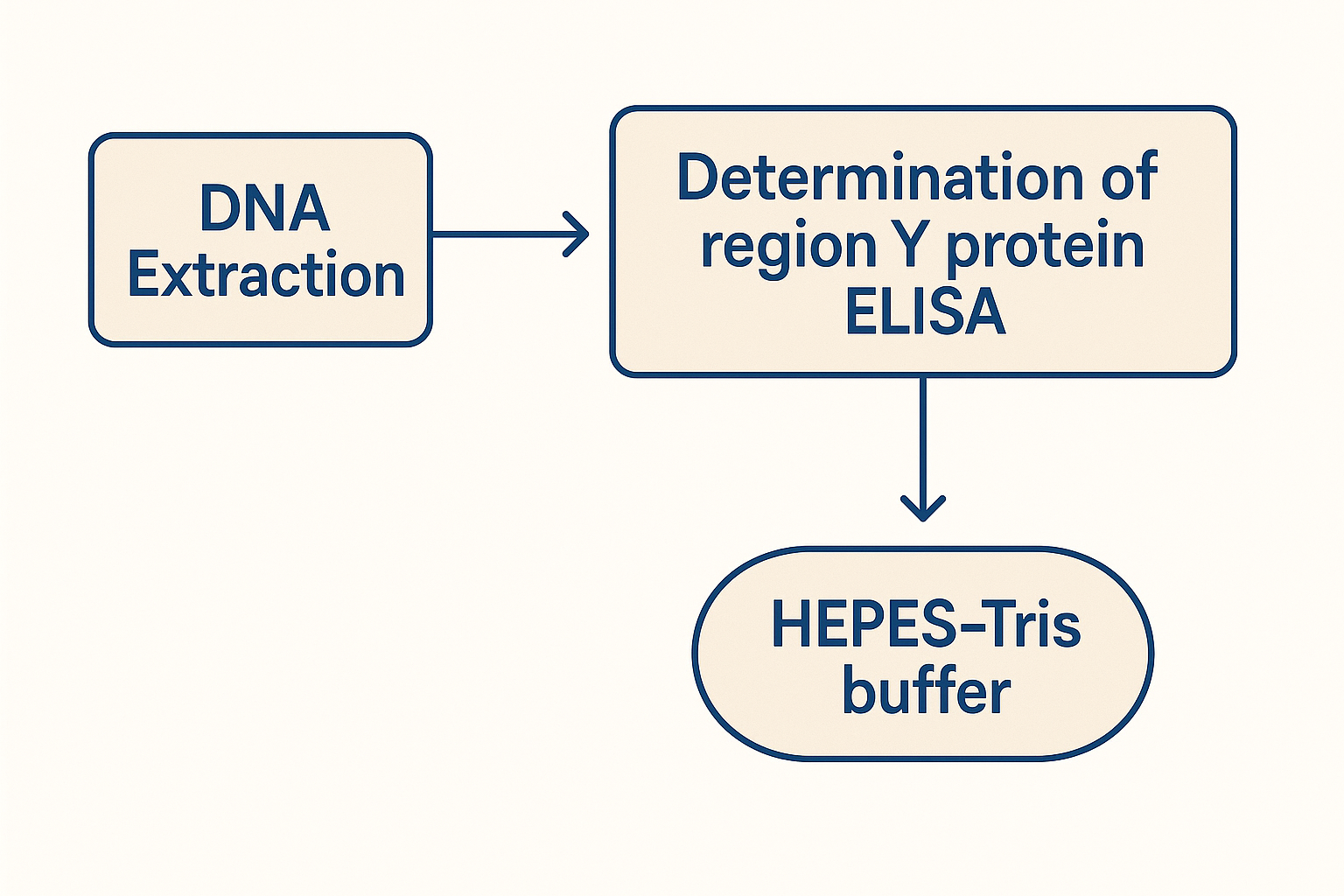
Parallel to nucleic acid amplification, Region Y Protein ELISA serves as a robust method for detecting Y chromosome-linked proteins, useful in sex identification in animal models and cell line characterization. Both assays often operate within HEPES-Tris buffered systems, known for their pH stability and compatibility with biological macromolecules.
This guide explores these components in detail, with a focus on laboratory utility, formulation components, optimization strategies, and research applications.
What is qPCR Master Mix?
A qPCR Master Mix is a pre-formulated solution designed to reduce preparation time and improve reproducibility in real-time PCR assays. It contains all necessary components except primers and template DNA.
Key Components:
-
DNA Polymerase: Often hot-start enzymes like Taq DNA Polymerase.
-
dNTPs: Balanced concentrations of deoxynucleotide triphosphates.
-
Magnesium Ions: Typically as MgCl₂, critical for enzyme function.
-
Buffer System: Maintains pH, typically Tris-HCl based.
-
Fluorescent Dye: SYBR Green or ROX for detection normalization.
For more information on qPCR protocols, refer to:
Advantages:
-
Minimizes pipetting errors
-
Standardizes conditions across multiple reactions
-
Supports multiplex amplification
Region Y Protein ELISA: Principle and Implementation
The Region Y Protein ELISA is designed to detect proteins encoded on the Y chromosome, particularly those used for molecular sexing in animals or tracking male cells in mixed cultures.
Biological Significance:
-
Sex Determination: Identifying male-derived samples in tissue mixtures.
-
Reproductive Biology: Assessing presence of male embryos.
-
Genetic Engineering: Validation of CRISPR or transgenic models involving Y-linked loci.
For gene-specific data, explore:

ELISA Format:
-
Capture Antibody Coating
-
Blocking with Non-specific Protein
-
Sample Incubation
-
Detection Antibody Binding
-
Color Development and Reading
Best practice protocols can be found at:
HEPES-Tris Buffer: Structure and Role
Buffers are vital for stabilizing pH in molecular biology workflows. The HEPES-Tris buffer system merges the strengths of two buffering agents:
-
HEPES: Effective at physiological pH (6.8–8.2), low UV absorbance.
-
Tris: High solubility and good buffering range (7.0–9.0).
This combination enhances:
-
Protein solubility
-
Enzyme activity
-
DNA binding efficiency
-
Immunoassay signal clarity
Resources:
Integrating qPCR and ELISA in HEPES-Tris Systems
Workflow Example:
-
Sample Collection: Blood, cells, or tissues stored in cold Tris-HEPES buffer.
-
Nucleic Acid Extraction: RNA or DNA is purified for qPCR using magnetic bead-based kits.
-
qPCR Amplification: SRY or DYZ1 sequences amplified for sex confirmation.
-
Protein Detection: ELISA for detecting Y-linked proteins like TSPY or SMCY.
-
Data Analysis: Relative expression compared across experimental groups.
For data interpretation tools:
Optimization Strategies
qPCR Master Mix Optimization:
-
Use freshly diluted primers
-
Avoid air bubbles in wells
-
Calibrate thermal cycler regularly
ELISA Tips:
-
Keep all reagents at room temperature before use
-
Wash plates thoroughly between steps
-
Avoid edge effects by not using outer wells
For troubleshooting:
Application Scenarios
. Livestock Genotyping
-
qPCR for SRY gene presence
-
ELISA for Y-linked protein to confirm embryo sex
. Cell Culture Monitoring
-
Ensuring Y chromosome absence in female iPSC lines
-
Y protein detection for contamination check
. Transgenic Model Validation
-
Monitoring insertion or deletion of Y-linked constructs
-
Protein detection for downstream expression tracking
Supporting links:

Chart: Workflow Integration
| Step | Reagent | Buffer | Target |
|---|---|---|---|
| DNA Extraction | Lysis buffer | HEPES-Tris | SRY Gene (qPCR) |
| qPCR | Master Mix + Primers | Tris-based | Male-Specific Sequences |
| Protein Isolation | Detergent-Free ELISA Buffer | HEPES-Tris | Region Y Protein |
| ELISA Detection | Capture + Detection Antibodies | HEPES | Antigen-Protein Binding |
Conclusion
Combining qPCR Master Mix technologies with Region Y Protein ELISA in a HEPES-Tris buffered environment provides a powerful approach for high-throughput analysis in molecular diagnostics, research, and animal genotyping.
These systems support:
-
Enhanced reproducibility
-
Rapid quantification
-
Versatility across sample types
By following guidelines from trusted institutions such as the NIH, CDC, FDA, and USDA, researchers can ensure the reliability and scalability of these platforms.