The Streptococcus A PCR External Run Control is a central tool in the field of molecular detection of bacterial nucleic acids, especially when targeting Group A Streptococcus (GAS) or Streptococcus pyogenes. This article presents a detailed technical overview of how external controls are used in PCR-based workflows, focusing on procedural consistency, reagent monitoring, and laboratory reliability. External run controls play a vital role in nucleic acid amplification tests (NAATs) for microbial detection and provide ongoing quality metrics.
Introduction to Group A Streptococcus and PCR Detection
Streptococcus pyogenes is a Gram-positive, beta-hemolytic bacterium, part of Group A Streptococcus, classified using the Lancefield system. Its detection is commonly achieved using quantitative PCR (qPCR) or real-time PCR. Amplification of specific target sequences—such as speB, sdaB, and 16S rRNA regions—enables sensitive and specific identification.
Real-time PCR targeting S. pyogenes is described in CDC molecular protocols and is recommended for enhanced performance compared to traditional culturing. Incorporating external run controls in this workflow ensures the accuracy and reproducibility of each PCR run.

What Is a Streptococcus A PCR External Run Control?
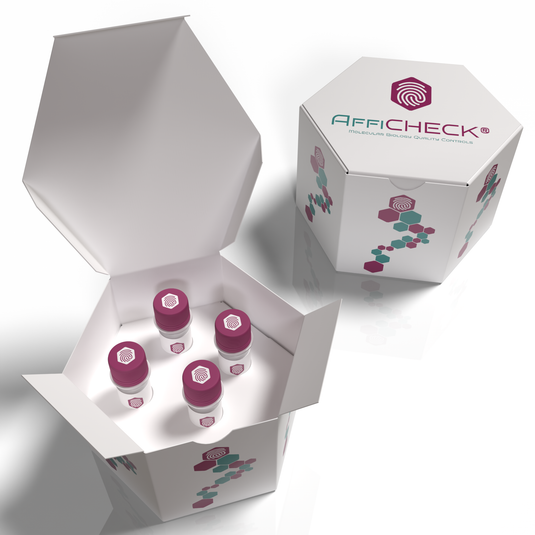
A PCR external run control is a synthetic or inactivated construct mimicking the GAS genetic target, processed alongside test specimens. It does not exist naturally in test samples, allowing it to serve as a consistent benchmark. Unlike internal controls, it verifies the entire workflow—from sample lysis, nucleic acid purification, amplification, to fluorescence detection.
Controls are available as lyophilized DNA, recombinant plasmids, or encapsulated constructs, and they do not interfere with clinical sample results.
Technical Parameters of External Controls
| Property | Specification |
|---|---|
| Format | Lyophilized DNA or recombinant synthetic DNA |
| Target gene mimic | speB, sdaB, 16S rRNA |
| Stability | Up to 24 months at 2–8°C |
| Storage post-resuspension | -20°C to -80°C |
| Compatible workflows | Magnetic bead extraction, silica column, lysis buffer-based methods |
These specifications are typically aligned with best practices detailed in NIH molecular methods articles and FDA validation resources.
Extraction Compatibility and Validation
External controls are used across multiple extraction methods:
-
Magnetic bead systems such as MagNA Pure, KingFisher, or NucliSENS.
-
Silica column methods from kits like QIAamp.
-
Direct lysis methods used in field settings.
According to CDC-approved methodologies, the external control is spiked into a matrix resembling clinical samples, and the nucleic acid is extracted identically. Monitoring cycle threshold (Ct) shifts allows identification of variation in the extraction or amplification process.
Platforms Supporting External Controls
Most qPCR cyclers support the integration of external run controls:
-
Bio-Rad CFX96 – Bio-Rad PCR guidelines
-
Applied Biosystems 7500 Fast – Thermo Fisher technical notes
-
Roche LightCycler 480
-
Qiagen Rotor-Gene Q
The NIH protocols repository offers comparisons of performance across platforms.
Real-Time PCR Assay Monitoring
External controls generate a consistent Ct value, allowing early detection of issues such as:
-
Reagent degradation
-
Thermal cycler calibration drift
-
Template contamination
-
Low enzyme activity
These issues are documented in CAP Laboratory Improvement documentation and CDC nucleic acid testing reports.
Workflow Integration for External Run Controls
A typical integration pipeline involves:
-
Adding 5–10 µL of external control to a negative matrix.
-
Running the spiked sample through extraction and PCR.
-
Comparing the Ct to the historical mean Ct ± 1.5 cycles.
-
Investigating discrepancies per CLSI MM03 guidelines.
Regulatory and Best Practice Guidelines
Laboratories using external PCR run controls follow quality assurance frameworks laid out by:
Compliance requires documented evidence of ongoing control testing and statistical process control for Ct values.
Common Failure Scenarios and Troubleshooting
When Ct values of the external control deviate significantly from expected ranges, the issue may stem from:
-
Inhibitors in reagents (see NIH inhibitor studies)
-
Thermocycler temperature inaccuracy
-
Degraded primers or probes
-
Improper storage of the control or master mix
Resolution includes validating reagents, rerunning controls, and checking calibration logs per manufacturer documentation.
Open Access Research Supporting External Controls
Several academic institutions emphasize the necessity of controls in daily workflows:
-
University of Washington documented long-term stability of synthetic DNA run controls.
-
Emory University studied sensitivity impact when using controls with inhibition spike-ins.
-
Johns Hopkins analyzed control utility across hundreds of GAS-positive specimens.
Automation and LIMS Compatibility
External run control data can be integrated with LIMS platforms, enabling:
-
Automated tracking of Ct values across runs
-
Alerts for out-of-specification values
-
Aggregated control performance reports
-
Integration with systems like Abbott mView, StarLIMS, or OpenELIS (OpenELIS Foundation)
These integrations are promoted in CDC open-source lab informatics and NIH LIMS toolkits.
Final Considerations
Incorporating Streptococcus A PCR External Run Controls in real-time PCR assays is a best practice that supports:
-
Accurate amplification monitoring
-
Reliable interpretation of results
-
Detection of batch-to-batch variation
-
Prevention of false-negative scenarios
The use of such controls ensures technical reliability across high-throughput and point-of-care molecular workflows. These tools represent a core component of modern laboratory operating procedures, especially in settings where technical consistency is required over time.